


Top 5 Scalers for Retro Consoles
Retro gaming on modern TVs can be tricky since older consoles output analog signals, while current TVs rely on HDMI. Scalers solve this by converting analog signals to high-definition digital output, ensuring your games look sharp and play smoothly. Here are five top scalers for retro consoles in 2025:
- RetroTINK 4K: Supports multiple inputs (composite, S-video, component, RGB/SCART) and outputs up to 4K. Price: $250–$300.
- OSSC (Open Source Scan Converter): Known for customization and near-zero lag. Outputs up to 1080p. Price: $150–$200.
- RAD2x Cables: Console-specific HDMI cables offering plug-and-play simplicity. Outputs 480p or 720p. Price: $60–$75.
- mClassic Retro: HDMI-only device that enhances visuals post-conversion. Outputs up to 1440p. Price: $99–$129.
- XRGB Mini Framemeister: Versatile scaler with broad input support but only available second-hand. Outputs up to 1080p. Price: $500–$800 (used).
Each scaler suits different needs, from budget-friendly options to high-end solutions for collectors. Below is a quick comparison:
| Scaler | Inputs | Max Output | Input Lag | Price (USD) | Setup Ease |
|---|---|---|---|---|---|
| RetroTINK 4K | Composite, S-video, Component, SCART | 4K | <1 frame | $250–$300 | Easy to Moderate |
| OSSC | SCART, Component, VGA | 1080p+ | <1 frame | $150–$200 | Moderate to High |
| RAD2x Cables | Console-specific (plug & play) | 480p/720p | Minimal | $60–$75 | Very Easy |
| mClassic Retro | HDMI only | 1080p/1440p | <1 ms | $99–$129 | Very Easy |
| XRGB Mini Framemeister | Composite, S-video, SCART, Component | 1080p | 1–2 frames | $500–$800 | Moderate |
Choose based on your setup, budget, and technical comfort. For help finding the right scaler, check out BJ’s Game Vault, a trusted source for retro gaming gear.
Why Retro Consoles Need A Scaler
1. RetroTINK 4K
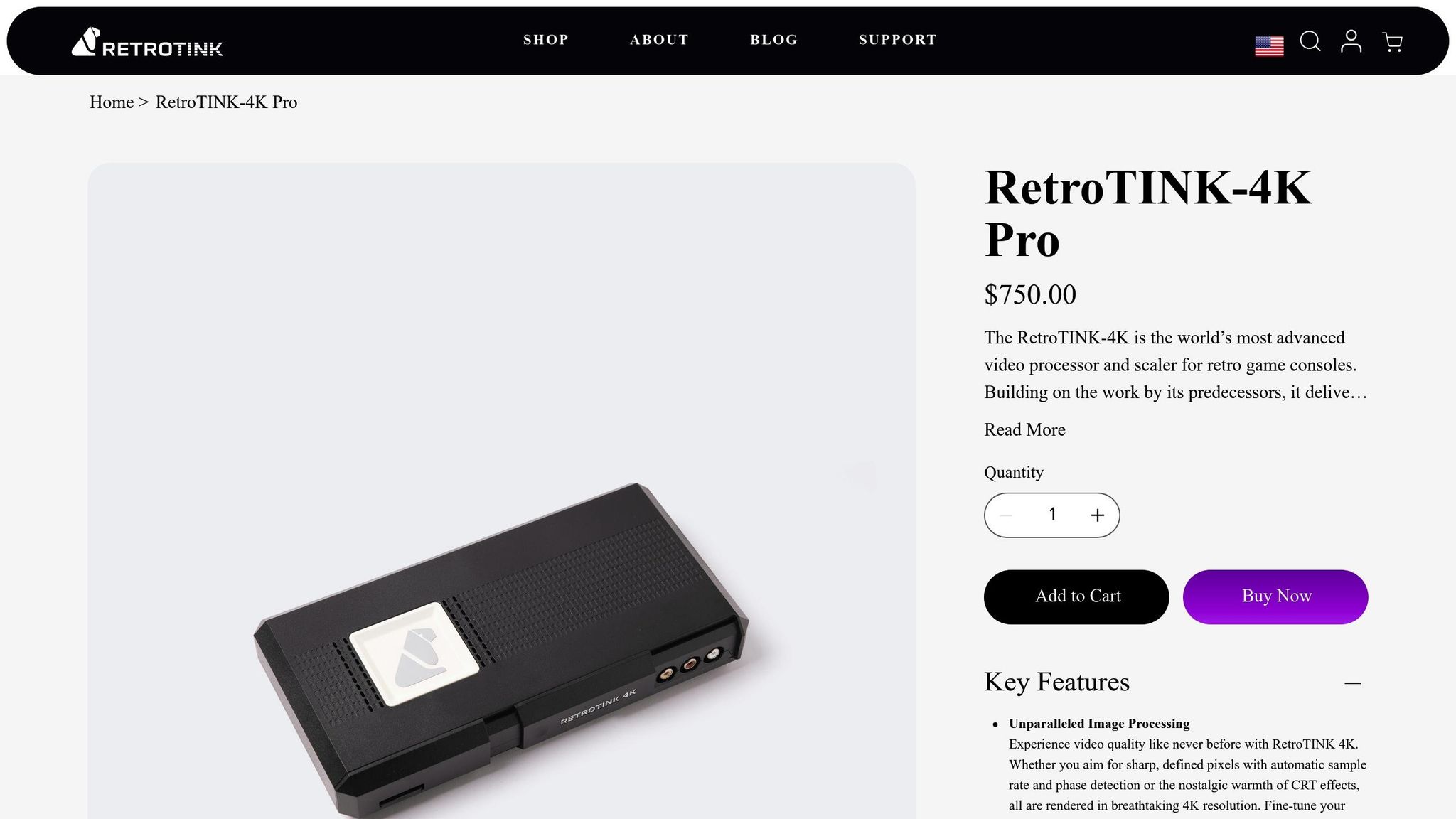
The RetroTINK 4K is a high-end scaler designed specifically for retro gaming fans who want to enjoy their favorite classic games on modern displays. It transforms analog video signals into sharp digital output while keeping that nostalgic feel intact. One of its standout features is its incredibly low input lag - usually under a single frame at 60 Hz. Plus, it includes CRT mask emulation, recreating the classic look of old-school CRT screens on today’s TVs. For those setting up a retro gaming collection, BJ's Game Vault offers the RetroTINK 4K along with expert setup tips to help you get the most out of it.
Input Compatibility
The RetroTINK 4K supports a variety of video inputs, including composite, S-video, component, and RGB/SCART connections. This means it works with a wide range of retro consoles, from iconic systems like the NES and SNES to the Sega Genesis, PlayStation, and Saturn. Whether your console outputs basic composite video or higher-quality RGB signals, this scaler is ready to go - no need for extra adapters or complicated configurations.
Output Resolutions
With output resolutions up to 4K (3840×2160), as well as options for 1080p and 1440p, the RetroTINK 4K offers plenty of flexibility. You can easily match your TV's native resolution, ensuring the visuals are crisp and the original artwork of your favorite games looks as good as ever.
U.S. Price Range
In the United States, the RetroTINK 4K is priced between $250 and $300 USD. While it’s on the higher end of the price spectrum, this reflects its top-tier features, durable construction, and compatibility with a wide array of retro gaming systems.
2. Open Source Scan Converter (OSSC)
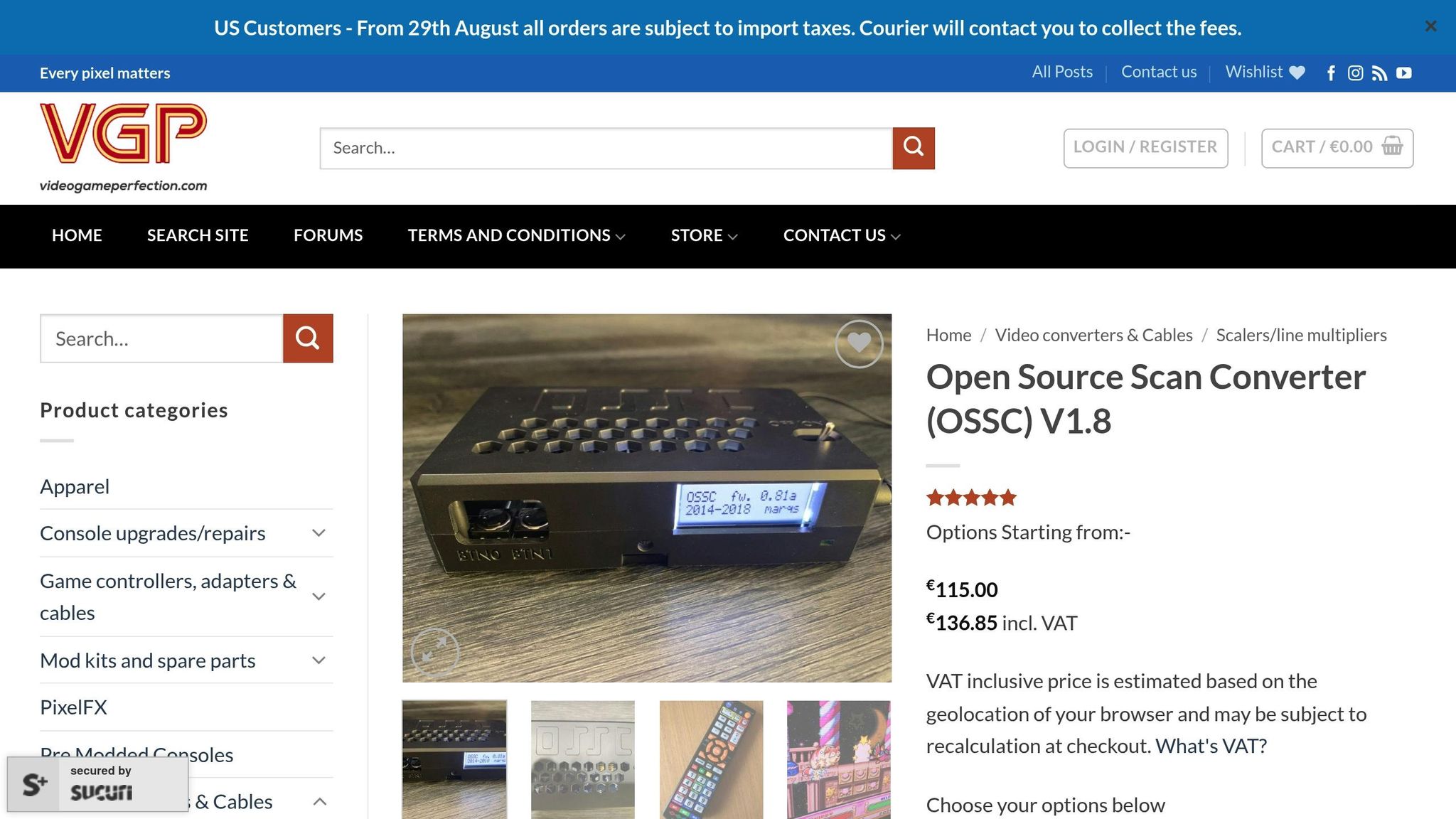
The Open Source Scan Converter (OSSC) has quickly become a favorite among retro gaming enthusiasts, thanks to its ultra-low input lag and high level of customization. Developed by a dedicated community, this scaler is designed to provide stunning visuals for retro consoles. Its open-source design ensures that both firmware and hardware are constantly improved by contributors around the world, offering frequent updates and plenty of options for tweaking.
Input Compatibility
The OSSC supports a variety of input types, including RGB/SCART, component (YPbPr), and VGA, making it compatible with consoles like the Super Nintendo, Sega Genesis, Neo Geo, and PlayStation 1/2. However, it’s worth noting that the OSSC doesn’t natively support composite or S-video inputs - you’ll need additional adapters for those connections.
Output Resolutions
One of the OSSC's standout features is its ability to upscale retro resolutions like 240p and 480i using line multiplication (2× to 5×). It outputs these signals up to 1080p over HDMI, allowing retro games to look sharp and vibrant on modern HDTVs.
Input Lag
When it comes to responsiveness, the OSSC excels. It boasts near-zero input lag, typically clocking in at under 1 millisecond. For retro gaming, where precise timing can make or break the experience, this level of performance ensures that every button press feels instantaneous.
U.S. Price Range
As of late 2025, the OSSC is priced between $150 and $200 USD in the United States. This price range makes it an appealing choice for dedicated retro gamers who want top-notch performance without breaking the bank. While the OSSC Pro model offers additional features at a higher cost, the standard OSSC strikes a great balance between price and performance. Retailers like BJ's Game Vault not only stock OSSC units but also offer expert advice to help you optimize your console connections and display settings. Up next, we’ll look at an option that simplifies cable management and connectivity.
3. RAD2x Cables
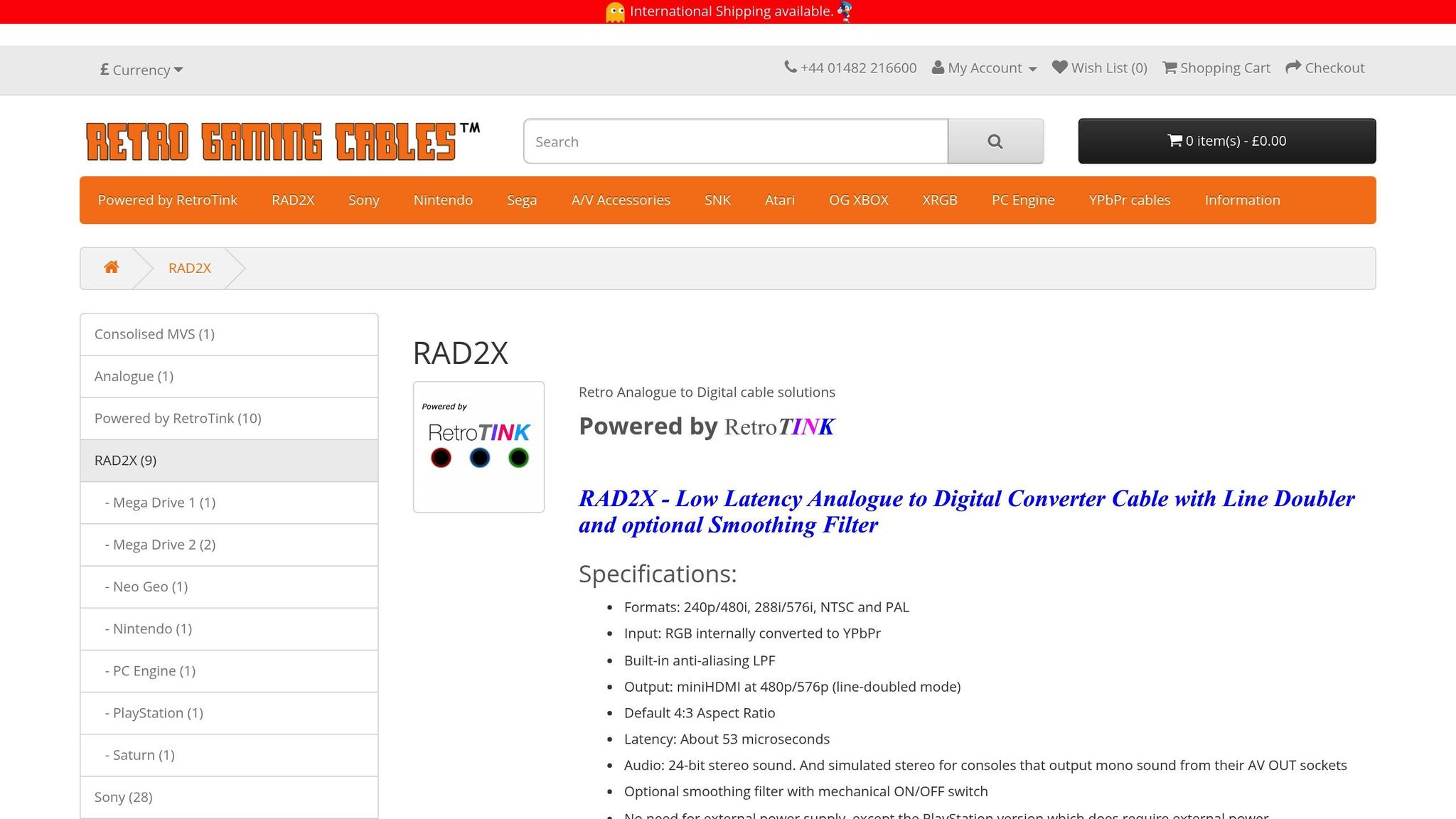
RAD2x cables provide a straightforward way to connect retro gaming consoles directly to modern HDTVs via HDMI, eliminating the need for extra scaler equipment. These cables are designed specifically for individual consoles, ensuring the best possible signal conversion and a seamless connection between older systems and today’s displays.
Each RAD2x cable is tailored to match the native output of specific consoles, such as the Sega Genesis/Mega Drive, PlayStation 1, PlayStation 2, and SNES. For instance, the Genesis version supports RGB/SCART signals, while the SNES model works with composite video inputs. By focusing on the unique output of each system, these cables ensure compatibility and deliver excellent performance.
The cables convert retro signals to digital HDMI at resolutions of 480p or 720p. While they don’t upscale to 1080p or 4K, the progressive scan output significantly enhances the quality of the original interlaced signals, resulting in a sharper and cleaner image.
One standout feature of RAD2x cables is their near-zero input lag, which ensures responsive controls and preserves the precision needed for an authentic gaming experience.
Priced between $60 and $75 USD per cable, RAD2x cables are a budget-friendly option compared to high-end scalers, especially if you only use a few retro systems. Retailers like BJ's Game Vault often carry these cables along with other retro gaming accessories, offering U.S. customers helpful advice on selecting the right cable for their setup.
For gamers new to retro systems, RAD2x cables are an excellent choice. They combine ease of use with reliable performance, delivering quality results without the complexity of advanced configurations.
sbb-itb-9a4764e
4. mClassic Retro
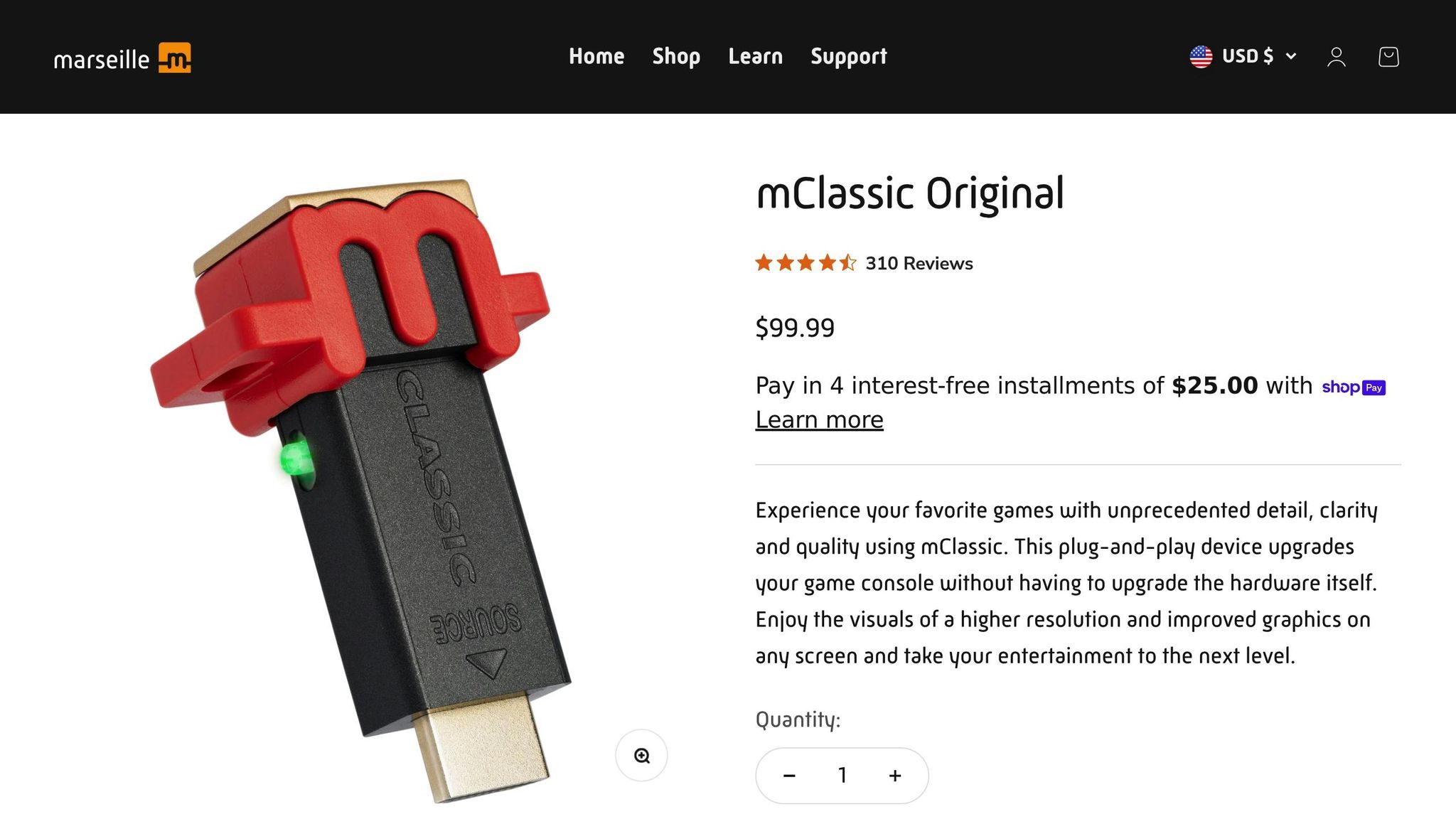
The mClassic Retro offers a fresh approach to improving retro gaming visuals by focusing on enhancing HDMI input signals rather than converting analog signals. This device works as a post-processing unit, refining video quality after analog signals are converted to HDMI using adapters like RetroTINK or RAD2x cables. When paired with a RetroTINK 2X, the mClassic produces sharper and cleaner visuals for classic systems like the NES, SNES, Sega Genesis, and N64, making pixel art and 3D graphics look noticeably better.
Input Compatibility
The mClassic Retro is designed exclusively for HDMI signals. It works seamlessly with consoles that either have built-in HDMI modifications or use HDMI adapters or upscalers. This focus on HDMI input ensures more precise and effective image processing.
Output Resolutions
This device can upscale content to 1080p or 1440p while also refining 4K output by smoothing edges and reducing pixelation. Its advanced image processing minimizes noise and blur, all while maintaining the authentic look of retro games. The mClassic Retro provides a simple, plug-and-play solution for elevating the visual quality of older games.
Input Lag
The mClassic Retro adds less than 1 millisecond of input lag, keeping gameplay smooth and responsive - perfect for fast-paced games that require quick reflexes.
U.S. Price Range
In the United States, the mClassic Retro is priced between $99 and $129 USD. To use it, just convert your console's output to HDMI before connecting it to the mClassic Retro.
5. XRGB Mini Framemeister
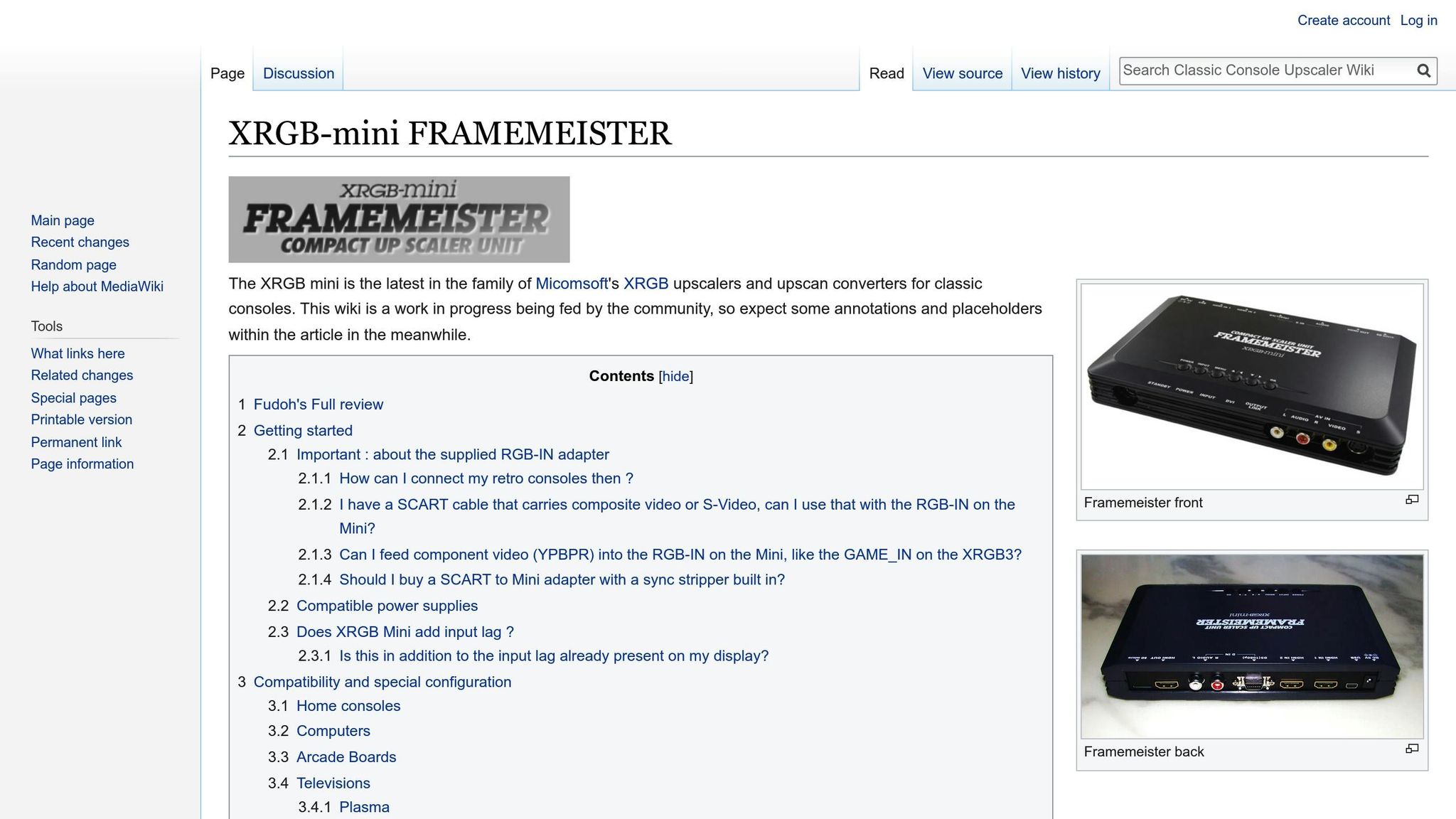
The XRGB Mini Framemeister is a well-known Japanese scaler that became a favorite among retro gaming enthusiasts for its ability to deliver outstanding image quality across a wide range of analog formats. Although it’s no longer manufactured, it earned its reputation by supporting nearly every analog video format found in vintage gaming consoles.
This all-in-one device handles everything from composite to high-end RGB inputs, offering on-screen options for scanline emulation and aspect ratio tweaks. These features let users fine-tune their gaming experience to suit each console.
Input Compatibility
One of the Framemeister's standout features is its broad input compatibility, making it a versatile tool for collectors with multiple retro systems. It supports composite video, S-video, component video (YPbPr), RGB/SCART, and HDMI inputs - essentially covering the entire spectrum of connections found in classic gaming systems.
The RGB/SCART support is particularly valuable for enthusiasts who want the best possible analog signals from consoles like the Super Nintendo, Sega Genesis, and original PlayStation. However, some RGB/SCART signals might need testing to ensure they work with your specific setup. This flexibility makes the Framemeister an excellent choice for those seeking reliable upscaling options.
Output Resolutions
The Framemeister is designed to upscale retro console signals to modern resolutions, offering 720p and 1080p output via HDMI. This makes it possible to play classic games on today’s flat-panel TVs, which often lack analog inputs. It also includes adjustable aspect ratio settings, allowing players to preserve the original 4:3 format of retro games or switch to a 16:9 display if preferred. These options ensure games look sharp and maintain their original proportions.
Input Lag
When it comes to input lag, the Framemeister performs well, with a delay of about 16–32 milliseconds (equivalent to 1–2 frames). This level of lag is generally acceptable for most retro gaming genres, including fast-paced action and fighting games. The result is smooth and responsive gameplay that stays true to the original experience.
U.S. Price Range
Since the Framemeister is no longer in production, it’s only available through the secondary market. Prices in the U.S. typically range from $500 to over $1,000, depending on the unit’s condition and whether accessories are included. As of 2025, most used units are sold for $500 to $800, though prices can exceed $800 due to its reputation and limited availability.
For buyers, the high cost is worth considering, especially if your setup requires support for S-video or composite inputs. When purchasing through second-hand channels, it’s important to confirm the unit’s authenticity, as counterfeit versions have occasionally surfaced.
Scaler Comparison Chart
Finding the right scaler depends on what you need, your budget, and how comfortable you are with technical setups. Here’s a quick breakdown of popular scalers to help you decide:
| Scaler | Input Compatibility | Max Output Resolution | Input Lag | Price Range (USD) | Setup Difficulty |
|---|---|---|---|---|---|
| RetroTINK 4K | Composite, S-Video, Component, SCART, VGA | 4K (3840×2160) | <1 frame | $250–$300 | Easy–Moderate |
| OSSC | SCART, Component, VGA | 1080p+ | <1 frame | $150–$200 | Moderate–Advanced |
| RAD2x Cables | Console-specific (plug & play) | 720p/1080p | Minimal | $60–$80 | Very Easy |
| mClassic Retro | HDMI only | 1080p/1440p (4K pass-through) | 1–2 frames | $100–$120 | Very Easy |
| XRGB Mini Framemeister | Composite, S-Video, Component, SCART, D-terminal | 1080p | 1–2 frames | $400–$600 (used) | Moderate |
The setup difficulty varies widely. If you want simplicity, RAD2x cables and the mClassic Retro are great plug-and-play options. On the other hand, the OSSC can be trickier, especially with TVs that struggle with its non-standard HDMI signals at higher line multiplication settings. For collectors with multiple console types, the RetroTINK 4K and XRGB Mini Framemeister stand out thanks to their broad analog input support.
If you’re diving into retro gaming in the U.S., BJ's Game Vault offers these scalers along with expert advice to help you build the perfect retro setup.
Conclusion
Picking the right scaler comes down to your budget, setup, and gaming priorities. For those new to retro gaming, RAD2x cables are an affordable and simple solution, typically costing less than $100. They’re the go-to plug-and-play HDMI option for classic consoles, delivering zero lag without the hassle of a complicated setup.
If you're after top-tier image quality, the OSSC is a favorite among advanced users. Its ability to deliver sharp visuals and its wide range of customization options make it perfect for gamers who enjoy fine-tuning their settings. Your comfort level with tech will guide whether this is the right choice for you.
The RetroTINK 4K offers high-end performance and flexible connectivity, making it a strong contender for those seeking versatility. On the other hand, the mClassic Retro is a straightforward option for gamers whose consoles already have HDMI support, offering a simple plug-and-play enhancement.
For collectors and enthusiasts, the XRGB Mini Framemeister still holds a special place. While it’s no longer in production, its performance justifies the extra effort - and cost - of finding one on the secondary market.
Your console collection should also influence your decision. If you own a variety of systems from different eras, a versatile scaler like the RetroTINK 4K might save you from needing multiple solutions. However, if you stick to just one or two systems, a more tailored, console-specific option could be the better value. Either way, a quality scaler can significantly enhance the visuals of your retro games.
For expert advice and curated retro gaming gear, BJ's Game Vault is a great resource. They offer a range of scalers and accessories to help you get the most out of your setup. Whether you're just starting out or hunting for rare components, their expertise in retro hardware can be a game-changer.
Finally, keep in mind that setup difficulty varies widely between these options. From plug-and-play simplicity to more complex configurations, it’s crucial to assess your technical skills and gaming needs before making a choice. As demand for zero-lag, high-quality upscalers continues to grow, taking the time to evaluate your setup will ensure the best experience for your retro gaming collection.
FAQs
What should I look for when selecting a scaler for my retro gaming consoles?
When setting up your retro gaming system, picking the right scaler can make all the difference. Start with compatibility - ensure the scaler supports your console's output format, whether that's composite, S-Video, or RGB, and that it works seamlessly with your display. Equally important is image quality; choose a scaler that reduces input lag and sharpens visuals without adding unwanted artifacts.
Don't forget to weigh the price against the features you need. Some scalers come with cool extras like scanline emulation or resolution tweaks, both of which can amplify that nostalgic gaming vibe. Oh, and if you're hunting for retro gaming gear or custom cartridges, BJ's Game Vault is worth checking out - they offer retro-tested items and one-of-a-kind creations.
How does input lag impact retro gaming with scalers, and which ones offer the best performance?
Input lag can have a big impact on your retro gaming experience, especially when you're playing fast-paced games that demand precise timing. Scalers play a key role here - they process the video signal from your console so it works with modern displays. However, this process can sometimes introduce delays. To avoid this, it's worth seeking out scalers that are built with retro gaming in mind. These models are often designed to focus on low-latency processing, which helps keep input lag as low as possible. Some of the top options, highlighted in our guide, excel at minimizing delay and delivering smoother, more responsive gameplay.
What compatibility issues should I consider when using external scalers with retro consoles?
When pairing external scalers with retro consoles, compatibility largely depends on the console's output and the inputs the scaler can accept. For instance, some scalers are unable to process older analog signals like RF or composite, while others are specifically built to handle these formats.
Another key factor is whether the scaler can manage the resolution and refresh rate your console outputs. Many retro systems use resolutions like 240p or 480i, which modern devices might misread or struggle to process. Additionally, check if the scaler offers the output you need - like HDMI - for a straightforward connection to contemporary TVs.
To ensure everything works smoothly, carefully review the specifications of both your console and the scaler. You might also need additional adapters or converters to bridge any compatibility gaps.