

How Emulation Keeps Gaming History Alive
Emulation is a powerful way to preserve gaming history, allowing you to play classic games on modern devices without needing outdated hardware. As gaming consoles and physical media degrade over time, emulation ensures these titles remain accessible for future generations. By replicating the functions of older systems, it keeps the original gaming experience intact.
Key takeaways:
- Why it matters: 87% of classic U.S. games are at risk of disappearing due to hardware decay and limited availability.
- How it works: Emulators mimic old hardware, using digital game copies (ROMs) to recreate the original experience.
- Examples: Popular tools like MAME, ZSNES, and Dolphin Emulator preserve arcade, SNES, and GameCube/Wii games.
- Challenges: Legal issues around ROMs and intellectual property complicate preservation efforts.
- Future trends: Cloud-based emulation could expand access, but it requires significant investment and legal clarity.
Emulation isn’t just about nostalgia - it’s a way to document gaming’s evolution and ensure its legacy remains intact. Whether through legal emulators, reproduction cartridges, or museum efforts, preserving games is a shared responsibility that benefits players, researchers, and developers alike.
What is Emulation and How Does It Work?
Definition and Purpose of Emulation
Emulation is the process of mimicking the behavior of old gaming hardware on modern devices. Think of it as a digital translator that allows vintage consoles and arcade machines to operate as they originally did - but on today’s technology. By replicating the functions of classic systems like the Nintendo Entertainment System, Sega Genesis, or even 1980s arcade cabinets, emulators make it possible to experience these games without the need for the original hardware. Unlike migration, which involves converting games into new formats, emulation creates a near-exact replica of the original hardware environment. This ensures the gaming experience stays true to its roots while adapting to modern displays and controllers.
How Emulators Preserve the Gaming Experience
The primary goal of emulators is to accurately recreate the original gaming experience, from gameplay and graphics to sound and even hardware-specific quirks. This level of precision is crucial for both historical preservation and for those who simply want to enjoy these games as they were meant to be played.
To accomplish this, emulation relies on two essential components: the emulator software and a digital copy of the game, commonly called a ROM image. These ROM images contain the game data extracted from cartridges, discs, or arcade boards. Without them, the emulator wouldn’t have the necessary code and assets to recreate the original experience.
The quality of an emulator depends heavily on how well it’s developed and the availability of technical documentation. Many emulators are built through reverse engineering, relying on publicly available information about the original systems to replicate their functionality.
Examples of Popular Emulators
Several well-known emulators showcase the importance of preserving gaming history. For example, MAME (Multiple Arcade Machine Emulator) replicates the hardware of countless arcade machines, preserving thousands of classic arcade games for future generations. ZSNES, an emulator for the Super Nintendo Entertainment System (SNES), ensures that a vast library of beloved titles remains accessible on modern computers. Meanwhile, the Dolphin Emulator supports Nintendo GameCube and Wii games, often enhancing graphics and adding features while staying true to the core gameplay.
These projects not only let gamers revisit classics on modern platforms but also act as critical tools for documenting how these original systems functioned, ensuring that the history of gaming remains alive and accessible.
Why Emulation is Needed for Gaming History
Hardware Limitations and Decay
Gaming consoles and physical media are not built to last forever. Over time, cartridges corrode, discs suffer from rot, and internal components wear out. This natural decay puts the legacy of gaming history at risk. The original hardware was never designed to endure indefinitely, which creates challenges for preserving the authentic gaming experience. As repairs become more difficult and replacements more scarce, emulation steps in as a practical way to ensure these classic games remain playable. Without it, we risk losing access to these important pieces of gaming history.
Expanding Access to Classic Games
According to a study by the Video Game History Foundation and the Software Preservation Network, an alarming 87% of classic U.S. video games are at risk of becoming inaccessible. Emulation removes barriers like regional restrictions and limited releases, allowing rare and region-exclusive titles to reach a wider audience. This not only helps preserve global gaming heritage but also makes these games available to people who might never have had the chance to experience them. Plus, emulation provides a cost-effective way to explore these classics without the need to hunt down expensive, fragile hardware.
Cost-Effectiveness of Emulation
Collecting retro games can be a pricey hobby. Rare cartridges and functioning consoles often sell for hundreds or even thousands of dollars. Emulation, on the other hand, offers access to extensive game libraries without the financial burden of acquiring and maintaining vintage hardware. It’s an economical approach to preserving gaming history while making it accessible to more people.
The Evolution of Emulation: Past, Present, and Future
Early Days of Emulation
The concept of video game emulation took root in the 1990s when enthusiasts and developers realized that gaming history was slipping away. As hardware aged and games went out of print, passionate hobbyists stepped in to preserve these classics, driven by their love for gaming and a desire to safeguard its legacy.
At its core, early emulation relied on reverse engineering and clean room design. Developers meticulously dissected hardware and software to recreate gaming systems without infringing on intellectual property laws. These methods not only set the technical groundwork but also established legal precedents that would shape preservation efforts for years.
While early emulators had their limitations - offering only basic compatibility and lower fidelity compared to today’s standards - they played a critical role in archiving games that were vanishing from the market. These early efforts marked the beginning of a movement that would grow into the sophisticated emulation systems we see today.
Modern Emulation Developments
Fast forward to today, and emulation has evolved far beyond simply replicating older hardware. Modern emulators now boast features like HD resolutions, enhanced controller support, and improved visual quality. Tools like DOSBox, for instance, can emulate entire IBM PC environments, making it possible to run older computer games seamlessly.
The recognition of emulation as a legitimate preservation tool has also gained traction in institutions. Take The Strong National Museum of Play, for example. This museum has embraced emulation as a key part of its exhibitions. During its "Women in Games" exhibit (2018–2022), it used emulation to showcase historical games that would otherwise be inaccessible due to outdated hardware.
However, the legal landscape surrounding emulation remains a maze. In 2015, the Library of Congress granted exemptions allowing preservationists to bypass copy-protection measures on games tied to defunct servers. Yet, challenges persist. In 2024, Nintendo filed a lawsuit against the creators of the Yuzu Nintendo Switch emulator, forcing them to halt operations and remove their Nintendo 3DS emulator, Citra. This case reignited debates about access to older games, especially with the closure of the 3DS eShop, leaving many titles at risk of being lost.
These advancements and obstacles highlight the complex dynamics shaping the next phase of emulation.
The Future of Emulation
The future of emulation is leaning toward cloud-based and web-browser platforms. Phil Spencer, head of Xbox Game Studios, has proposed that cloud gaming infrastructure could support emulation on powerful server backends, streamlining the experience for users. Cloud-based solutions promise benefits like reduced hardware demands for players, centralized system maintenance, and potentially more sustainable preservation methods.
But this shift isn’t without challenges. Cloud-based emulation requires substantial financial investment and improvements in network technology to become scalable. Another pressing issue is the preservation of modern games, which often depend on online servers, digital rights management, and intricate licensing agreements. Future emulation efforts will need to address not just game code but also the ecosystems that support these titles, including server-side functions and licensing systems.
The path forward will require collaboration among preservationists, game developers, and legal experts to craft solutions that respect intellectual property while ensuring gaming history is preserved for future generations.
It's Still Emulation: Saving Video Game History Before It's Too Late
sbb-itb-9a4764e
The Legal and Ethical Aspects of Emulation
Emulation plays a key role in preserving classic games, but it also brings up complex legal and ethical questions. This digital preservation effort often finds itself at odds with intellectual property laws, creating a challenging balancing act. While the technology behind emulation is legitimate, the way game files are acquired and used often falls into murky legal territory shaped by ongoing court decisions and regulations.
Copyright and Intellectual Property Issues
The legality of emulation hinges on an important distinction: emulators created through reverse engineering are generally considered legal. However, using ROM images - unless they are directly copied from games you personally own - violates copyright law.
In 2015, the Library of Congress acknowledged the preservation challenges surrounding older games by granting specific exemptions under the Digital Millennium Copyright Act. These exemptions allow preservationists to bypass copy-protection mechanisms on obsolete games. Despite this progress, the exemptions are limited. They don’t extend to games that rely on server-client systems, such as many MMOs, and they don’t permit the widespread sharing of ROMs.
Nintendo’s aggressive stance on emulation, including lawsuits against emulator developers, highlights the tension between preserving gaming history and protecting intellectual property rights. These legal battles underline the need for a more nuanced conversation about how to preserve gaming culture responsibly.
Ethical Considerations in Game Preservation
Even with legal restrictions in place, the ethical responsibility to preserve gaming history remains strong. Emulation raises critical questions about how to honor the cultural significance of games while respecting the creators’ rights. Many classic games are tied to aging hardware that’s increasingly rare and expensive, making emulation one of the few practical ways to ensure these games remain accessible to future generations.
Organizations like the Video Game History Foundation are leading the charge in non-commercial preservation efforts. They focus on showcasing the cultural and historical importance of video games while steering clear of actions that could harm the commercial interests of rights holders.
However, ethical dilemmas arise when methods used to recover lost or inaccessible content push the boundaries of legality. While "fair use" might provide some legal protection for academic and preservation purposes, it’s an uncertain defense when it comes to using ROMs.
The commercial implications of emulation further complicate the ethical debate. Widespread emulation could potentially harm developers and publishers by reducing the demand for re-releases or remastered versions of classic games. Ethical preservation efforts aim to avoid this by focusing on educational and archival purposes, such as museum displays and academic research, rather than profit-driven distribution.
Moving forward, collaboration between preservationists, rights holders, and legal experts is essential. Sustainable solutions, such as innovative licensing agreements or partnerships between public and private sectors, could help strike a balance between preserving gaming history and respecting intellectual property. Frank Cifaldi of the Video Game History Foundation has emphasized the need for such forward-thinking approaches.
For individuals, taking an ethical stance means using only legally obtained game files, supporting official re-releases when they’re available, and advocating for expanded legal exemptions to support preservation efforts. This could involve creating ROMs from games you own instead of downloading them from unauthorized sources and supporting organizations working to establish fair legal frameworks for game preservation.
How BJ's Game Vault Supports Retro Gaming Preservation
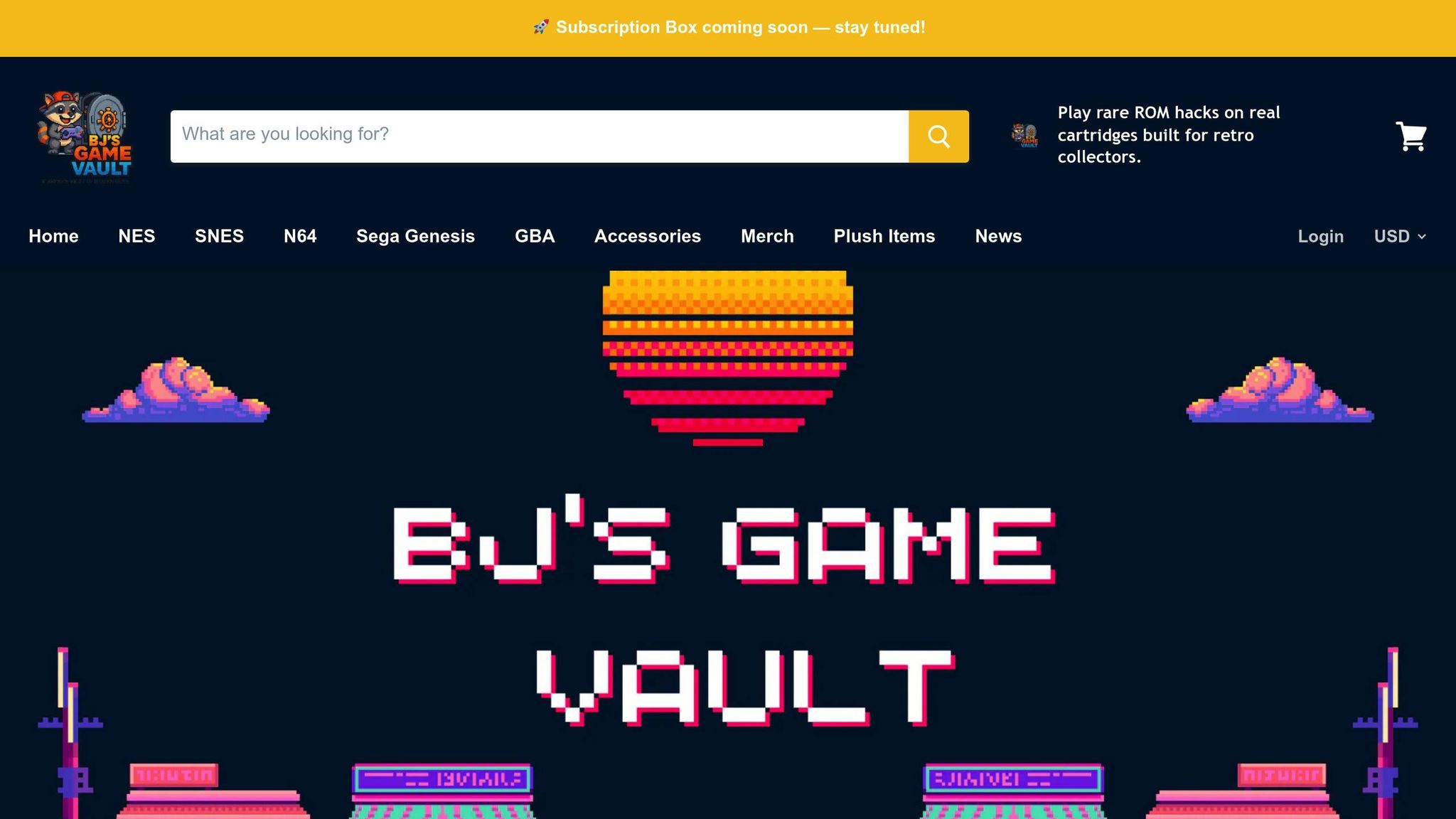
When it comes to preserving the legacy of retro gaming, physical reproductions offer a unique way to keep the experience alive. While digital emulation ensures games are not lost to time, physical reproductions bring back the tactile joy of playing on original hardware. BJ's Game Vault has carved out a niche in this space, creating products that make classic gaming hardware and experiences accessible to collectors and enthusiasts alike. Let’s explore how their offerings bridge the gap between digital archives and physical, playable artifacts.
Reproduction Cartridges for Classic Consoles
BJ's Game Vault is well-known for producing reproduction cartridges for vintage systems like the NES, SNES, Sega Genesis, N64, and Game Boy Advance. These cartridges play a crucial role in preserving gaming history, especially as original copies of popular titles become increasingly rare and expensive. For instance, while an original NES cartridge of a sought-after game might cost hundreds of dollars, BJ's reproduction cartridges are priced between $30 and $80, making retro gaming more affordable for new players and collectors alike.
Each cartridge is carefully crafted and rigorously tested on original hardware to ensure it functions just like the originals. This attention to detail ensures a gaming experience that feels authentic, often surpassing what emulation can achieve.
"Retro-tested, satisfaction guaranteed" - BJ's Game Vault's Collector's Guarantee
This rigorous testing process ensures compatibility with vintage consoles, controllers, and even save systems, addressing a common concern in the reproduction market. By verifying that their cartridges work seamlessly with decades-old hardware, BJ's Game Vault ensures that players can enjoy these games as they were originally intended.
Rare ROM Hacks and Custom Game Cartridges
BJ's Game Vault goes beyond standard reproductions by offering physical cartridges of rare ROM hacks and custom games. These unique creations bring fan-made content to life, allowing gamers to play them on original hardware. This service is especially valuable for preserving community-driven innovations that might otherwise remain confined to the digital realm.
Their catalog includes standout examples of these custom creations. For instance, the Perfect Dark - NES cartridge ($55.05) reimagines the N64 classic for an 8-bit audience, while Rick and Morty - NES ($59.99) offers a brand-new adventure tailored to the NES platform. These cartridges not only expand the library of retro games but also preserve the creativity of fan communities.
"Each game is tested and built for real retro consoles because collectors deserve the classics that never were." - BJ's Game Vault
Another example is the He-Man: Masters of the Universe – NES cartridge ($49.99), which fills a gap in gaming history. While He-Man had limited representation on the NES during its heyday, this custom cartridge creates a high-quality, 72-pin experience that feels like a lost gem from the 1980s. These creations don’t just celebrate fan ingenuity - they also ensure that these innovations are preserved in a playable, physical format.
By turning ROM hacks and custom games into tangible cartridges, BJ's Game Vault helps document the evolution of fan creativity and ensures these works can be enjoyed on the hardware they were designed for. This approach complements digital preservation efforts by creating enduring, playable records of community contributions.
Retro-Tested Items and Collectibles
BJ's Game Vault extends its retro-testing standards beyond cartridges to include a wide range of collectibles and accessories. Every item is tested on original hardware to guarantee authenticity and reliability, which is vital for collectors, museums, and researchers who rely on accurate reproductions.
Additionally, the store offers custom game creation services, allowing customers to commission personalized cartridges. Whether it’s preserving a historical prototype or creating a unique game, this service ensures that one-of-a-kind projects are documented and made accessible to the gaming community. These custom creations contribute to preserving gaming history in a way that’s both functional and meaningful for enthusiasts and historians alike.
Conclusion: Emulation as a Foundation of Gaming History Preservation
As we've explored, emulation plays a crucial role in preserving gaming history, breathing new life into forgotten classics while addressing the challenges of hardware decay and system discontinuation. With the video game industry now valued at $180 billion, it's striking that many of its foundational works are at risk of disappearing without dedicated preservation efforts. Emulation steps in to keep these games alive and accessible, even in the face of legal and technological hurdles.
The Video Game History Foundation and Software Preservation Network reveal a stark reality: most classic games are unavailable through legal commercial means. Without emulation, much of gaming's heritage would remain out of reach. Museums and archives rely heavily on emulation to showcase historical games that would otherwise be inaccessible due to aging hardware or licensing restrictions.
Industry leaders are increasingly recognizing the importance of emulation, acknowledging it as more than just a tool - it's a vital part of preserving gaming's cultural and educational significance. While digital emulation safeguards software, physical reproductions provide a hands-on connection to the past. Companies like BJ's Game Vault make this history tangible by offering reproduction cartridges at affordable prices, allowing gamers to experience retro titles without paying the high costs often associated with original copies.
Preserving gaming history is a collective effort. Whether you're using legal emulators with games you own, supporting creators of reproduction cartridges, or advocating for broader preservation initiatives, your involvement helps ensure that gaming's rich legacy endures. While emerging technologies like cloud gaming and streaming may shape the future, today's combined digital and physical preservation efforts lay the groundwork for future generations.
Gaming history isn't just about entertainment - it's a record of innovation, artistry, and cultural evolution. Through emulation and other preservation methods, we can ensure that the golden age of gaming remains accessible and meaningful for educators, researchers, and enthusiasts who will continue to celebrate and learn from this remarkable legacy.
FAQs
What role does emulation play in preserving gaming history, and why does it matter?
Emulation serves as a key tool in safeguarding gaming history, allowing classic games to be enjoyed on today’s devices. Many older titles, once tied exclusively to outdated hardware, can now reach new audiences thanks to this technology.
By preserving these games, we’re not just keeping entertainment alive - we’re protecting a piece of gaming’s cultural and historical legacy. Emulation lets us revisit the creativity and ingenuity of the past while sparking inspiration for the future of the industry. For retro gaming enthusiasts, places like BJ's Game Vault add to this preservation effort by offering reproduction vintage games, custom cartridges, and other nostalgic treasures.
What are the legal challenges surrounding emulation, and how do they affect the preservation of retro games?
Emulation comes with its fair share of legal hurdles, mostly tied to copyright laws and intellectual property rights. While building an emulator is generally within legal bounds, the trouble begins when it comes to using or sharing ROMs (the game files). Without explicit permission from the copyright owner, this can lead to serious legal complications. This puts enthusiasts in a tricky spot - many want to preserve gaming history but don’t have access to officially licensed options.
These legal roadblocks can make it harder to archive and share classic games, especially for titles that are no longer available or supported by their original developers. Even so, emulation plays an important role in keeping retro gaming alive. It gives fans a way to revisit and celebrate the legacy of older games. For those looking for legal ways to enjoy retro gaming, shops like BJ's Game Vault offer options like reproduction cartridges and custom creations, helping to keep the nostalgia and excitement of classic gaming intact.
How do reproduction games help preserve retro gaming history?
Retro gaming owes much of its continued appeal to reproduction games, which bring rare or out-of-print titles back into the hands of modern players. These physical recreations allow gamers to experience classic titles on their original hardware, preserving the authentic feel that collectors and enthusiasts cherish.
Stores like BJ's Game Vault play a key role in this effort by offering top-notch reproductions for iconic consoles such as the NES, SNES, Sega Genesis, N64, and GBA. By doing so, they connect today’s players with gaming history, ensuring that the legacy of retro gaming remains vibrant for generations to come.