

Mario vs. Sonic: Pop Culture Easter Eggs
Mario and Sonic have been gaming icons for over 40 years, and their transition to movies and TV has brought a treasure trove of Easter eggs for fans to enjoy. These hidden references connect audiences to their gaming roots, sparking nostalgia and adding layers of fun to their stories.
- Mario's Approach: Packed with constant nods to Nintendo's history, like the GameCube startup sound in Luigi's phone or Charles Martinet's cameo in The Super Mario Bros. Movie. Fans love the dense references, turning scenes into visual scavenger hunts.
- Sonic's Approach: Focuses on character lore and subtle nods, such as the "Sanic" meme in Sonic the Hedgehog or Tails’ debut year hidden in Sonic Prime. Easter eggs often enhance storytelling rather than overwhelm it.
Both franchises use these details to connect with longtime fans and introduce new audiences to their legacy. Whether you're spotting Mario's F-Zero posters or Sonic's Genesis-era music cues, these Easter eggs keep the magic alive across generations.
Easter Eggs in Mario and Sonic Media
What Easter Eggs Are and Why Fans Care
Easter eggs - those hidden messages, features, or nods tucked away in games or films - have been delighting fans for decades. They trace back to 1980, when Atari programmer Warren Robinett secretly embedded his name in the game Adventure. Atari's Steve Wright, the Director of Software Development, loved the idea and encouraged more hidden surprises in future projects. Gaming content creator LLXP explained it best:
"He thought it would be cool for players to find hidden surprises in future games and he called them Easter eggs like the hidden surprises you seek on Easter."
These subtle callbacks and hidden details resonate deeply with fans. Recognizing an obscure character, sound effect, or visual reference can spark instant nostalgia, reminding players of their favorite childhood moments. For many, these Easter eggs feel like a direct nod from creators, celebrating the shared history of the franchise and its fans. This tradition has become a cornerstone of gaming culture, and franchises like Mario and Sonic have embraced it in their unique ways.
Mario Easter Eggs: A Timeline
Mario's history with Easter eggs goes back decades, evolving alongside the franchise itself. One of the earliest examples appeared in 1986 with the anime Peach-hime Kyūshutsu Dai Sakusen!, where Mario was shown playing a Famicom console. This small but clever nod hinted at the playful references that would define the series in the years to come. Fast forward to April 2023, and The Super Mario Bros. Movie took this tradition to new heights, weaving in over 40 years of Nintendo history.
The 2023 film is packed with tributes that longtime fans couldn’t miss. Charles Martinet, the original voice of Mario, made a cameo as Giuseppe, a character seen playing a "Jumpman" arcade game - a direct nod to Mario's original name in Donkey Kong (1981). This arcade legacy continues in modern fan-made titles like Handy Harvy, which draws inspiration from these early platforming classics. The movie also featured clever environmental details, like "Punch-Out Pizzeria" and a "Chasse au Canard" (Duck Hunt) restaurant, alongside posters referencing F-Zero and Ice Climber scattered through Brooklyn. Even Luigi's phone ringtone - a recreation of the Nintendo GameCube startup sound - was a delightful touch that hit fans right in the nostalgia.
Sonic Easter Eggs: A Timeline
Sonic's approach to Easter eggs feels a bit different. Instead of building a sprawling web of references like Mario, Sonic media focuses on character lore and teasing future storylines. The Sonic film franchise, in particular, has leaned into these moments, often using post-credit "stingers" to introduce major characters like Tails or Shadow and set the stage for sequels.
The Easter eggs in Sonic media tend to emphasize elements tied closely to the franchise's identity. From the Genesis-era level designs and iconic music to visual cues that highlight Sonic's signature speed, these nods keep the spotlight squarely on the blue blur himself. While Mario's Easter eggs draw from a broad Nintendo catalog, Sonic's hidden details reinforce its character-driven narrative and distinct style. Together, these timelines show how both franchises use Easter eggs to deepen their connection with fans and leave a lasting impression across generations.
sbb-itb-9a4764e
Nintendo Easter Eggs in Sonic Comics and Cartoons! - Sonic Easter Egg Hunt (UPDATED)
Mario vs. Sonic Easter Eggs in Movies
Mario vs Sonic Movie Easter Eggs Comparison
Mario Easter Eggs in Movies
The 2023 Super Mario Bros. Movie raised the bar for video game adaptations, packing an impressive number of references into its 92-minute runtime. Fans and critics alike noted that "practically every moment" of the film contained a nod to the franchise's rich 40-year history. The producers intentionally designed the movie to mirror the experience of playing the games, creating a visual treasure hunt that rewarded longtime fans.
This approach struck a chord with audiences, with many returning to theaters just to catch Easter eggs they might have missed the first time around.
Sonic Easter Eggs in Movies
The Sonic the Hedgehog film series has also carved out its space in the cinematic world. While these movies don’t cram in as many rapid-fire references as the Mario film, they take a more deliberate route. The Easter eggs are carefully placed to enhance the storyline and pay homage to the franchise's legacy. This thoughtful approach creates a different kind of fan experience, one that balances nostalgia with storytelling.
This difference sets up an interesting comparison between the two franchises and how they handle cinematic Easter eggs.
Movie Easter Eggs: Direct Comparison
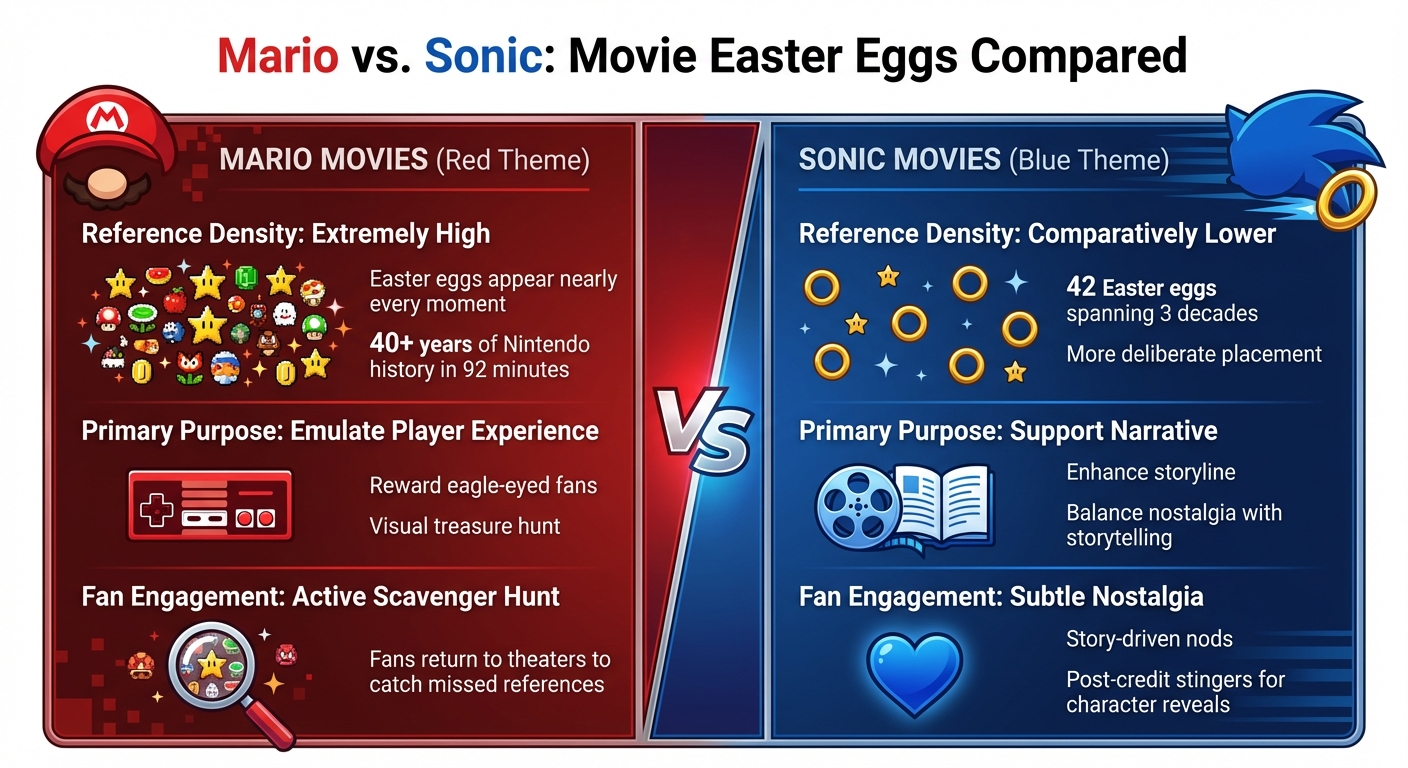
The table below highlights the contrasting strategies of the Mario and Sonic movie franchises. Mario's films go all-in on constant callbacks, immersing viewers in decades of gaming history, while Sonic opts for a subtler approach that complements its narrative.
| Aspect | Mario Movies | Sonic Movies |
|---|---|---|
| Reference Density | Extremely high - Easter eggs appear nearly every moment | Comparatively lower |
| Primary Purpose | Emulate the player experience and reward eagle-eyed fans | Support and enhance the narrative |
| Fan Engagement | Fans delight in spotting hidden nods | Engages through subtle nostalgia* |
*Note: Specific details about Sonic’s Easter eggs are less extensively documented.
Each franchise takes a unique path, appealing to fans in different ways. Mario enthusiasts revel in the immersive, reference-heavy experience, while Sonic fans enjoy the understated, story-driven nods to their beloved 16-bit hits.
Mario vs. Sonic Easter Eggs in TV Shows
Both Mario and Sonic have found clever ways to sneak Easter eggs into their TV adaptations, giving fans a mix of nostalgia and fun surprises.
Mario Easter Eggs in TV Shows
The Super Mario Bros. Super Show! brought Mario to TV with 65 animated episodes that often parodied famous films like Star Wars and Ghostbusters. One standout feature was the "Plumber's Log", a playful twist on Star Trek's "Captain's Log", showing the show's preference for pop culture nods over deep Mario lore.
Modern cartoons have kept the Mario spirit alive. The Amazing World of Gumball includes several nods to Mario’s gaming adventures, such as go-karting, his fear of ghosts, and his bond with the 8-bit character Ocho. Meanwhile, The Amazing Digital Circus used iconic sound effects from Super Mario 64, like the treasure chest opening and the ripple effect from paintings. Amphibia also joined in on the fun, parodying Mario Kart with a "blue-shelled beetle" that hones in on the leader, much like the infamous blue shell in the games.
Live-action shows have added their own Mario-inspired touches. Brooklyn Nine-Nine throws in the line "Wario cheats!", 30 Rock gives a nod to Donkey Kong, and Abbott Elementary mentions a Super Mario Sunshine speedrun on the GameCube. These references highlight the different ways Mario's legacy pops up across genres.
Sonic Easter Eggs in TV Shows
Sonic’s TV adaptations have their own clever references, often tying back to the franchise’s history.
In Sonic Prime, fans can spot a few key nods to Sonic lore. For example, entering the code 1992 unlocks Tails’ workshop, marking the year of his debut, and Big the Cat’s citizen number (1‑9‑9‑8) references his introduction in Sonic Adventure in 1998. A fun callback to Sonic’s early design comes when Dr. Done It refers to him as a "blue rabbit", a nod to the character’s original concept. To top it off, the classic 1991 Genesis spike damage sound plays during mishaps.
In Sonic Boom, the show frequently breaks the fourth wall with gaming-related humor. In one standout moment, Cubot asks, "What if the princess is in another castle?". This line directly references Mario’s iconic catchphrase, blending Sonic’s humor with a wink to gaming fans everywhere.
How Fans React to Easter Eggs
Why Easter Eggs Trigger Nostalgia
Hidden references in movies and games often spark a wave of nostalgia for fans, reminding them of cherished moments from their favorite franchises. Take the stained glass window in Peach's Castle from The Super Mario Bros. Movie, for example. For many, it’s a direct callback to Super Mario 64. As SYFY WIRE described:
No one could blame you if you got a little nostalgic pull in your stomach at the sight - and immediately relived running across the stone bridge to enter the castle all those years ago as Mario
.
Sound and music also play a huge role in these reactions. Familiar tones - like the Sega startup sound, the chime from collecting rings, or iconic 8-bit melodies - can instantly transport fans back to their early gaming days. The Sonic the Hedgehog movie credits, for instance, include a 16-bit-style adaptation that mirrors the visuals of the original Sega Genesis games. These sensory cues resonate deeply, creating a shared emotional connection among fans of franchises like Mario and Sonic.
Beyond individual memories, these Easter eggs tap into shared experiences. References to moments like "ruining friendships" over heated Mario Kart races or watching a sibling struggle through a tough level strike a universal chord, making the nostalgia feel even more communal.
Fan Discussions and Memes
The nostalgia triggered by Easter eggs doesn’t just stay personal - it often sparks lively discussions and meme creation online. Social media platforms like Twitter and Hive have become go-to spaces where fans exchange screenshots, dissect hidden references, and engage in what feels like a collective scavenger hunt.
For example, the first Sonic the Hedgehog movie is packed with at least 42 Easter eggs spanning nearly three decades of the franchise's history. Fans even uncovered a fun detail confirming Sonic is left-handed, putting to rest years of speculation. Sega also embraced the fan-made "Sanic" meme - a crude drawing of Sonic - by including it in the movie, which only fueled more online conversations and memes.
Another example of how fan sentiment evolves is the "DK Rap." Initially criticized when it debuted in 1999, the song has since gained a cult following. Its inclusion in The Super Mario Bros. Movie reflects this shift in fan appreciation. Composer Grant Kirkhope shared his thoughts on the track’s journey:
When I wrote the 'DK Rap' I thought everyone would get the joke... It's taken 20 years, but I think that people are finally coming 'round to the idea
.
These moments show how Easter eggs not only evoke nostalgia but also bring fans together, creating a sense of community both online and off.
Keeping Mario and Sonic Alive in Pop Culture
Easter eggs play a big role in keeping Mario and Sonic relevant for both longtime fans and newcomers. By embedding references from over 40 years of gaming history into modern movies and TV shows, creators connect adults who grew up with 8-bit consoles to younger audiences just discovering these iconic characters.
Take The Super Mario Bros. Movie, for example. Released in April 2023, it raked in over $400 million globally during its first week, breaking records for the biggest worldwide opening for an animated film. Its success wasn’t just about nostalgia - it was about weaving in nods to everything from the 1981 Donkey Kong arcade game to 2017's Super Mario Odyssey. These hidden gems transformed the movie from a passive experience into an active treasure hunt for fans.
The 2020 Sonic the Hedgehog movie followed a similar approach, packing in at least 42 Easter eggs spanning three decades. From 16-bit style credits that mirrored the original Sega Genesis games to subtle callbacks, these details added layers of enjoyment for eagle-eyed fans.
But it’s not just about what’s on screen. The physical world also helps keep these memories alive. Retro gaming stores offer a direct connection to the past, letting fans relive the games that inspired these cinematic moments. Spotting a reference to Super Mario 64’s stained glass window or hearing the GameCube startup jingle often sparks the urge to revisit the originals. That’s where places like BJ’s Game Vault come in, offering classic cartridges for systems like NES, SNES, Sega Genesis, N64, and GBA. Whether it’s a reproduction of Super Mario World or a custom ROM hack cartridges, these products let fans go from seeing a reference on screen to experiencing the actual game again. This blend of digital Easter eggs and retro gaming retail creates a deeper connection, bringing old memories back to life.
Mario and Sonic’s legacy also thrives through their shared history. Once rivals, they’ve become co-stars in games like Super Smash Bros. Ultimate, creating a nostalgic bond that fans continue to celebrate. Their evolution reflects a broader sense of community, uniting generations through a shared love for these characters. As Shigeru Miyamoto, the creator of Super Mario Bros., once said:
We recognized that each fan of the video game has a Mario in themself, as he is the avatar that represents the player
. This idea - that these characters are extensions of the players themselves - explains why Easter eggs resonate so strongly. It’s also why Mario and Sonic remain timeless icons in pop culture, decades after their first appearances.
FAQs
How do I spot Easter eggs on a first watch?
Pay attention to the small details in the background, the props, and the way characters are designed - these often hide subtle nods to other games or lore. Easter eggs might show up as recognizable logos, surprise cameos, or references to classics like Mario Kart or Donkey Kong. To catch them all, try watching more than once, focusing on different aspects each time. Doing a little research on potential Easter eggs beforehand can also make spotting them during your first viewing a lot more fun.
Why are Mario references more frequent than Sonic’s?
Mario references pop up more often in movies and TV shows because of his long history and the tradition of sneaking clever Easter eggs into his franchise. With decades under his belt, Mario has become a nostalgic figure for both creators and fans. On the other hand, Sonic’s Easter eggs, while still popular, tend to be more recent and often tied to specific films, which makes them less frequent compared to Mario’s broader appeal and recognition.
Which shows have the best Mario or Sonic nods?
The live-action Super Mario Bros. movie is packed with fun Easter eggs that celebrate Nintendo's history. For example, there's a nod to Duck Hunt with a cleverly named restaurant and a hidden Arwing model from the Star Fox series. Meanwhile, the Sonic the Hedgehog franchise doesn’t hold back either. The upcoming Knuckles show teases iconic goal plates and features plenty of familiar faces from the series.
What makes these adaptations shine is how they pay tribute to their respective franchises. The Super Mario Bros. movie excels at weaving in Nintendo's legacy, while Sonic adaptations continue to charm fans with franchise-specific references that feel like a love letter to longtime players.